Healthy plant growth depends on steady nutrition, not simply adding more fertilizer. So, what is slow-release fertilizer used for? It supplies nutrients gradually, helping plants avoid sudden growth surges, root stress, and fertilizer burn. Its coated granules work like small time-release capsules in the soil.
This fertilizer is useful for vegetables, flowering plants, shrubs, lawns, and container gardens. A gardener might mix a measured amount into damp soil before planting. Later, watering and soil temperature activate the granules. Growth becomes more even. Leaves may look greener, while roots receive a steadier nutrient supply.
It is not a magic fix.
Horticulturist Dr. Linda Chalker-Scott reminds gardeners, “Fertilizers are not plant food; plants make their own food through photosynthesis.” Her point matters because fertilizer supports growth, but it cannot replace sunlight, water, oxygen, or healthy soil. The right product still depends on the plant, season, soil condition, and label instructions.
Slow-release fertilizer can reduce frequent feeding and limit nutrient loss from heavy watering. However, “slow” does not mean harmless in unlimited amounts. Overapplication may still damage roots or disturb nearby waterways. A soil test can reveal whether feeding is necessary, and careful measuring improves reliability.
This article explains how to choose, apply, and monitor slow-release fertilizer for healthier plants. It also considers common mistakes, including applying granules to dry soil or ignoring seasonal temperature changes. Results may vary. That uncertainty deserves attention. A thriving plant is not created by fertilizer alone, but by several small decisions working together.
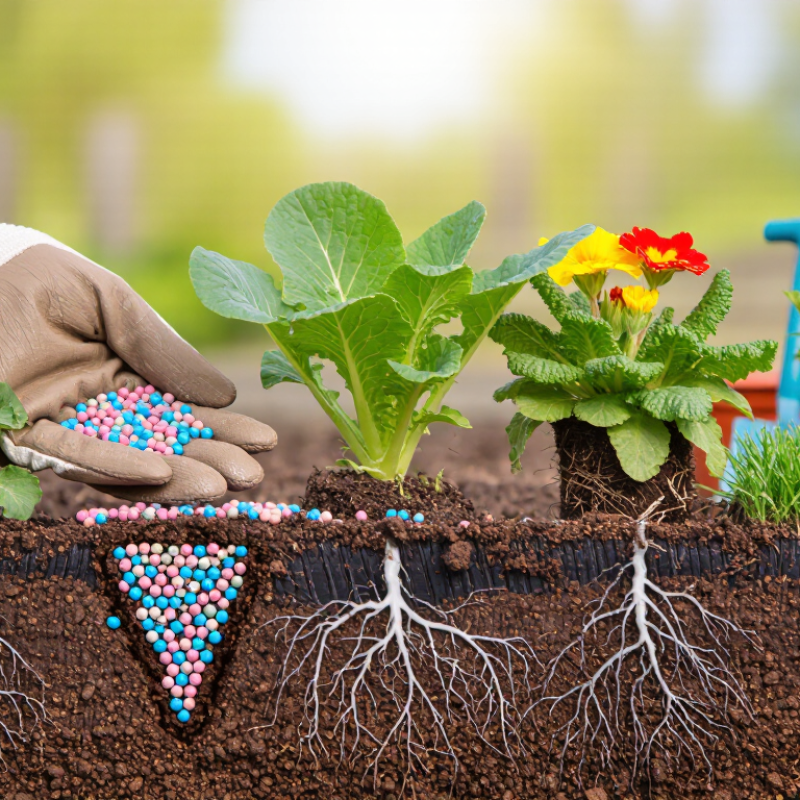
Understanding Slow-Release Fertilizer and How It Works
How to Use Slow Release Fertilizer for Healthy Plant Growth?
Understanding Slow-Release Fertilizer and How It Works
Slow-release fertilizer feeds plants gradually instead of releasing all nutrients at once. Its coating, pellets, or mineral structure controls how quickly nutrients dissolve in soil. Moisture and temperature usually influence this process. Warm, wet soil often speeds up nutrient release, while cool, dry soil slows it down.
In my garden, I mix the recommended amount into the top few centimeters of soil before watering thoroughly. I avoid placing pellets directly against stems or roots. That mistake can cause concentrated fertilizer injury, especially in young plants. A light application is safer than guessing heavily. Check the product label for plant type, soil conditions, and application timing.
Not every plant needs the same feeding schedule. Leafy vegetables may respond to steady nitrogen, while flowering plants often need a different nutrient balance. Soil testing gives more reliable guidance than leaf color alone. Pale leaves can indicate nutrient deficiency, but they may also reflect poor drainage, root damage, or disease. Slow-release fertilizer cannot fix every problem.
Observe the soil.
I inspect new growth after several weeks, rather than expecting overnight results. Sometimes growth remains weak because sunlight is insufficient, not because fertilizer is missing. I have occasionally overestimated a plant’s needs, and recovery took longer than expected. Careful observation, moderate feeding, and consistent watering usually produce healthier growth.
Choosing the Right Fertilizer for Your Plants and Soil
How to Use Slow Release Fertilizer for Healthy Plant Growth?
Choosing the right slow release fertilizer starts with the plant and the soil, not the package. Leafy plants often need more nitrogen, while flowering plants may benefit from balanced nutrients and extra phosphorus. Check the soil’s pH and nutrient levels when possible. A simple soil test can prevent unnecessary feeding and reduce root damage. Granular fertilizers release nutrients gradually, but moisture and temperature affect their speed. Dry soil can delay release, while hot weather may increase it.
Tips: Read the nutrient ratio carefully. Choose a formula suited to your plant’s growth stage. Use less in poor-draining soil. Mix granules into the top layer, keeping them away from stems. Water afterward, but do not flood the pot. In containers, drainage holes matter.
I once used too much fertilizer on young herbs, expecting faster growth. The leaves became dark and curled at the edges. That mistake taught me to measure carefully and watch the plant for two weeks. Slow release does not mean risk-free. Follow the application rate, then adjust only after observing new leaves, soil moisture, and overall color. Plants in rich compost may need little additional nutrition. Plants in sandy soil may require more frequent, lighter applications. Results can be uneven. Weather, roots, and watering habits all change the outcome.
How to Use Slow Release Fertilizer for Healthy Plant Growth? - Choosing the Right Fertilizer for Your Plants and Soil
Slow-release fertilizers supply nutrients gradually, helping reduce nutrient losses and the risk of over-fertilization. Select the product type and nutrient ratio according to the plant’s growth stage, soil condition, and watering pattern.
| Fertilizer Type |
How Nutrients Are Released |
Typical Release Period* |
Suitable Plants or Situations |
Recommended Soil Conditions |
Application Guidance |
| Coated Granules |
A semipermeable coating allows water to enter and nutrients to diffuse out gradually. |
Approximately 2–6 months, depending on temperature, moisture, and coating design. |
Container plants, ornamental shrubs, bedding plants, and general landscape plantings. |
Well-drained soil with consistent moisture; avoid prolonged waterlogging. |
Apply evenly over the root zone, keep granules away from direct contact with stems, and water after application. |
| Organic Granules |
Microorganisms decompose organic materials and release nutrients as plant-available forms. |
Approximately 4–12 weeks, influenced strongly by soil temperature, moisture, and microbial activity. |
Vegetable gardens, perennial borders, and soil-building programs. |
Moist, biologically active soil with adequate aeration; extremely cold or dry soil slows release. |
Mix into the upper soil layer before planting or apply around established plants without disturbing major roots. |
| Urea-Form Fertilizer |
A portion of nitrogen is converted gradually by soil microorganisms into plant-available nitrogen. |
Several weeks to a few months, depending on formulation and soil conditions. |
Lawns, turf areas, and established plants requiring a steady nitrogen supply. |
Well-aerated soil with sufficient moisture and moderate microbial activity. |
Use according to the nitrogen rate on the label; avoid application before heavy rain to reduce runoff and nitrogen loss. |
| Plant-Response Formula |
Phosphorus and potassium are supplied in forms selected for root development, flowering, or stress tolerance; release speed varies by formulation. |
Usually several weeks to a few months. |
Flowering plants, fruiting crops, and plants with a confirmed need for phosphorus or potassium. |
Use only after soil testing or clear crop-specific evidence of nutrient need. |
Do not use high-phosphorus fertilizer routinely when soil phosphorus is already sufficient; excessive phosphorus can contribute to water pollution. |
| Complete N-P-K Blend |
Provides nitrogen (N), phosphate expressed as P₂O₅, and potash expressed as K₂O in a single formulation. |
Commonly 2–6 months for coated blends; shorter for many organic blends. |
General feeding where soil-test results and plant requirements support all three nutrients. |
Match the blend to soil-test results; avoid unnecessary nutrients. |
Choose the lowest effective rate and calculate the amount from the nitrogen percentage and the planting-area size. |
Important: Release times are typical estimates rather than guarantees. Warm temperatures and adequate moisture generally increase nutrient release, while cool, dry, or waterlogged conditions can slow it. Always follow the product label, test soil when possible, and keep fertilizer out of drains and waterways.
Applying Slow-Release Fertilizer at the Correct Rate
Applying Slow-Release Fertilizer at the Correct Rate
Slow-release fertilizer works only when the dose matches the plant, soil, and growing container. The International Fertilizer Association’s 2024 outlook places global fertilizer nutrient demand near 200 million tonnes annually. That scale makes precision important, even in a small garden. Start with a soil test, not guesswork. USDA NRCS Practice Standard 590 recommends soil testing, nutrient budgeting, and application according to crop needs. Read the label carefully. If the stated rate is 3 grams per liter, a 10-liter container requires 30 grams, not a generous handful. Measure twice. Keep granules away from stems, then water thoroughly.
For young plants, use the lower end of the recommended range. Their roots are limited, and excess nutrients can burn tender foliage. Established plants may tolerate a higher rate, especially in fast-draining media. Apply evenly across the surface, or mix it into the upper few centimeters without damaging roots. Do not repeat the application simply because growth looks slow. Release depends on moisture and temperature. Warm, wet conditions can accelerate nutrient release. I once treated pale leaves with extra fertilizer, but poor drainage was the real problem. The leaves worsened. That mistake still matters. Check root health, moisture, and light before increasing the dose. A 2023 review in Science of the Total Environment found that enhanced-efficiency fertilizers can reduce nutrient losses, but performance varies by soil, climate, and management. Measure results after several weeks, then adjust cautiously.
Monitoring Plant Growth and Adjusting Fertilizer Use
Slow-release fertilizer supports steady nutrition, but healthy growth still requires regular observation.
Check new leaves, stem strength, and soil moisture once or twice each week. Deep green leaves and balanced growth usually suggest adequate feeding. Pale leaves, weak stems, or slow development may indicate a nutrient shortage, poor light, or damaged roots.
Do not assume fertilizer is always the answer.
Use a simple growth record.
Note the application date, fertilizer amount, watering pattern, and plant changes. Measure height with a ruler and photograph the same angle weekly. I once increased feeding after seeing pale leaves, but the real problem was waterlogged soil. The roots lacked oxygen. That mistake taught me to inspect drainage before adding nutrients.
Adjust fertilizer use gradually.
If growth becomes soft, unusually fast, or dark green, reduce the next application and improve light exposure. If growth remains weak after correcting moisture and light, apply a smaller amount than the label’s maximum guidance. Slow-release granules can continue feeding for weeks, so extra fertilizer may accumulate unnoticed. Check the soil surface and root zone before reapplying. In containers, occasional thorough watering can help move excess soluble nutrients away, provided the pot drains freely. Keep records, but remain flexible; plants respond differently across seasons, temperatures, and pot sizes.
Conclusion
Slow-release fertilizer is designed to provide plants with a steady supply of nutrients over time, reducing the risk of nutrient loss and over-fertilization. What is slow-release fertilizer used for? It is mainly used to support consistent plant growth, strengthen roots, improve foliage development, and encourage flowering or fruit production. The right formula should be selected according to the plant’s nutritional needs, soil condition, and growing stage. Testing the soil and reading the fertilizer label can help determine the most suitable nutrient balance.
Before application, remove weeds, loosen compacted soil, and make sure plants have adequate moisture. Apply the fertilizer at the recommended rate, spreading it evenly around the root zone without allowing it to touch stems or leaves directly. Watering afterward can help activate the nutrients. Throughout the growing season, monitor leaf color, new growth, and overall plant health. If growth is weak or excessive, adjust future applications carefully rather than adding large amounts at once.

 TH Fertilizer