Poor plant growth can look like a fertilizer problem, but the real cause may be hidden elsewhere. What causes poor plant growth without fertilizer? Often, the answer involves weak light, compacted soil, irregular watering, damaged roots, pests, or unsuitable temperatures. A plant beside a bright window may still receive too little usable light. Wet soil can also suffocate roots, even when the surface appears dry.
This guide focuses on practical ways to restore growth without relying on commercial fertilizer. Start by observing the plant closely. Check leaf color, stem strength, soil moisture, drainage holes, and signs of insects. Move the pot gradually toward brighter light, rather than exposing shaded leaves to harsh midday sun. Water deeply only when the upper soil feels dry, then let excess water drain completely. Small changes matter.
Do not expect instant recovery. Plants need time. I once blamed poor growth on missing nutrients, but the real issue was a cold, waterlogged pot. That mistake was useful, although avoidable. Removing damaged leaves, loosening compacted soil, and repotting root-bound plants can improve conditions. Clean rainwater may help sensitive plants, but water quality differs between homes. Some plants will not recover without replacing depleted nutrients eventually. That limitation deserves honesty. Careful diagnosis remains safer than adding random products. Observe weekly, record changes, and adjust one condition at a time. This approach may feel slow, but it reveals what the plant actually needs.
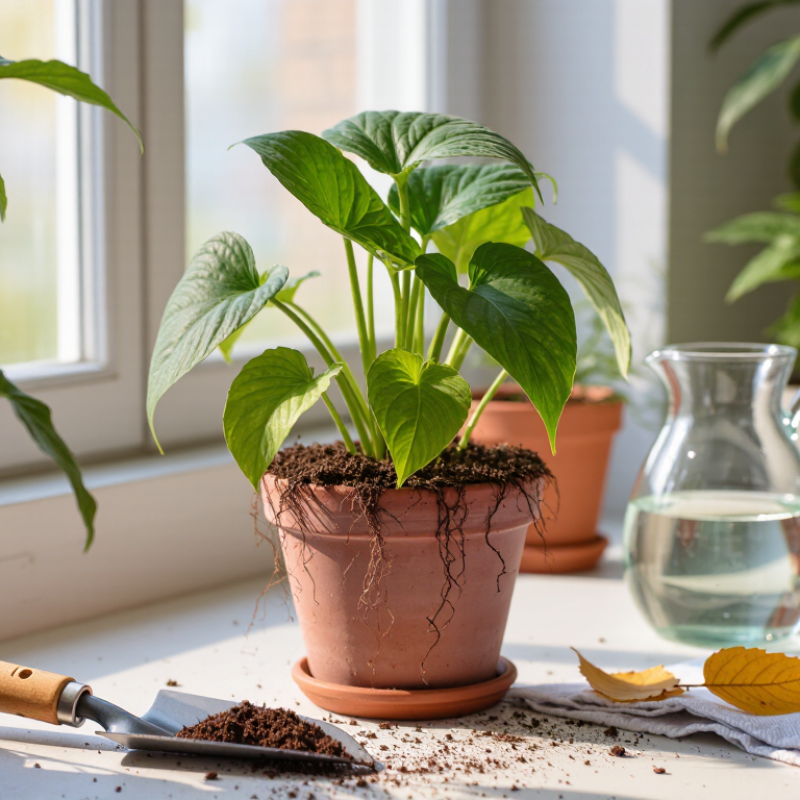
How to Fix Poor Plant Growth Without Fertilizer
Identify the Main Cause of Weak or Stunted Plant Growth
Weak growth is usually a symptom, not proof of missing fertilizer. Start by comparing the plant with its recent growth pattern. New leaves that are small, pale, or widely spaced often suggest insufficient light. A sunny window may still be too dim during winter. Check the roots. Healthy roots are usually firm and light-colored, not dark, slimy, or sour-smelling.
Watering problems are equally common. Press a finger two inches into the soil before watering. If it feels wet for several days, poor drainage may be restricting oxygen around the roots. If it is bone-dry and pulling away from the pot, the plant may be repeatedly dehydrated. Inspect stems and leaf undersides for webbing, sticky residue, or tiny insects. Pests can quietly reduce growth before visible damage becomes severe.
Temperature and transplant stress also deserve attention. Cold drafts near glass can slow growth, while hot air from heaters dries leaves quickly. I once moved a struggling plant into brighter light too suddenly, and its leaves scorched. That mistake taught me to change conditions gradually. Move the plant a short distance every few days. Loosen tightly circling roots only when the root mass is genuinely crowded. Test soil pH when symptoms persist, because unsuitable pH can block nutrient uptake even when nutrients are present. Keep notes on light, watering, and new growth; memory is less reliable than observation.
When a plant stalls, resist adding fertilizer immediately. I once blamed pale leaves on poor soil, but a shaded window caused the problem. Check its light for a full day. Thin, stretched stems often indicate insufficient light. Move the plant gradually. Harsh afternoon rays can scorch leaves. Turn the pot weekly, and measure new growth with a simple ruler.
Watering needs a closer test. Press one finger into the soil before watering. If the surface feels dry but deeper soil remains wet, wait. Constantly damp soil can reduce oxygen around the roots. Check that excess water drains freely. A heavy pot may still hold moisture. I have overcorrected before by watering less, then waited too long.
Temperature and airflow also influence growth. Keep the plant away from cold glass, heaters, and sudden drafts. Most indoor plants respond better to stable conditions. Gentle air movement can reduce stagnant humidity and leaf disease. However, strong airflow may dry the leaves quickly. Inspect the undersides of leaves every few days. Dust, curling edges, or tiny insects can reveal a problem that fertilizer would never solve.
How to Fix Poor Plant Growth Without Fertilizer
Poor growth often begins below the soil line. Roots need oxygen, moisture, and open pathways for expansion. When soil stays wet for days, fine roots can turn brown, smell sour, or detach easily. The FAO Status of the World’s Soil Resources reports that about 33% of global soils are moderately or highly degraded. Compaction and poor structure are major concerns. USDA Natural Resources Conservation Service guidance commonly considers about 50% pore space suitable for healthy mineral soil. Your container may have far less.
Check drainage before feeding the plant. Slide it from the pot and inspect the root ball. Healthy roots are usually firm and pale, though color varies by species. Cut away only black, mushy roots with sterilized scissors. Choose a pot with several open drainage holes. Repot into a loose, stable mix containing particles of different sizes. Do not place gravel at the bottom; it can raise the saturated zone instead. Water slowly until excess flows out, then empty the saucer. I used to water by calendar. That habit failed in winter.
Tips: Push a wooden stick several centimeters into the mix. If it comes out wet and muddy, wait. Test again later. Keep the plant in bright, suitable light, because weak light also slows water use. Improvement may take weeks, and one drainage change will not repair severely damaged roots overnight. Correlation is not proof; observe new roots and leaves before changing anything else.
A practical, fertilizer-free guide to diagnosing root and drainage problems
| Observed Symptom | Likely Root or Drainage Problem | Useful Check | Fertilizer-Free Correction | Expected Indicator of Improvement |
|---|---|---|---|---|
| Leaves wilt while the soil remains wet | Waterlogged root zone; roots may be receiving too little oxygen | Check whether the container has open drainage holes and whether water remains on the surface for several minutes | Pause watering, move the plant to brighter indirect light if appropriate, and empty the saucer after drainage | New leaves remain firm and the root zone dries gradually between waterings |
| Brown, black, or soft roots | Root decay associated with prolonged excess moisture or poor aeration | Gently remove the plant and inspect roots; healthy roots are generally firm, while decaying roots are often soft or hollow | Trim only clearly damaged roots with clean tools, replace soggy medium, and use a clean pot with drainage holes | The plant stops declining and produces firm, pale new roots or new growth |
| Water runs down the sides and exits immediately | Compacted or shrunken potting medium is channeling water instead of absorbing it evenly | After watering, check whether the center of the root ball is still dry | Rehydrate slowly in several passes, or repot into fresh, evenly textured medium if the root ball is severely compacted | Water spreads through the root ball instead of bypassing it |
| Soil stays wet for many days after watering | Container is too large, medium retains excessive water, or drainage holes are blocked | Lift the container to assess weight and inspect the drainage holes | Use a pot only modestly larger than the root ball, clear blocked holes, and avoid placing the pot directly in standing water | The container becomes noticeably lighter as the medium dries |
| Leaves yellow while growth is slow | Overwatering, damaged roots, insufficient light, or normal aging rather than a confirmed nutrient deficiency | Check root condition, soil moisture, light exposure, and whether yellowing affects old or new leaves | Correct moisture and light conditions first; remove only leaves that are fully dead | Yellowing slows and emerging foliage has normal firmness and color |
| Roots circle tightly around the container | Root-bound condition restricting water movement and available growing space | Look for dense roots circling the outer edge or emerging from drainage holes | Gently loosen the outer roots and move the plant to a container with adequate drainage and only slightly more space | Watering becomes more even and new roots extend into the surrounding medium |
| A sour odor or algae appears on the soil surface | Persistent surface moisture and limited air exchange in the medium | Smell the medium and inspect whether the surface remains wet between waterings | Allow the surface to dry as appropriate for the plant, improve air circulation, and replace degraded medium if necessary | The surface dries more normally and the odor disappears |
| Plant wilts soon after watering | Root damage, unevenly dry root ball, or water-repellent compacted medium | Test moisture at several depths and inspect roots if wilting continues despite moist soil | Water slowly and thoroughly when needed; repot if the medium is compacted or roots are damaged | Leaves recover more consistently after appropriate watering |
Poor growth is not always a fertilizer problem. In a crowded bed, leaves stay damp after morning watering. That moisture can encourage fungal disease. The Food and Agriculture Organization estimates that plant pests destroy up to 40% of global crop production annually (FAO, 2019). Inspect leaf undersides twice weekly. Look for aphids, whiteflies, chewed edges, sticky residue, or pale speckles. Remove badly damaged leaves with clean scissors. Place them in household waste, not the compost pile.
Give each plant more breathing room. Prune crossing stems and remove leaves touching the soil. Water near the roots during the morning, keeping foliage dry. If one plant shows powdery patches or dark lesions, isolate it quickly. Clean tools with household disinfectant after cutting infected tissue. This small habit is easy to forget. I sometimes notice disease only after several leaves have collapsed. That delay can spread problems through an entire container.
Use physical controls before stronger interventions. A fine mesh can block flying pests, while a gentle water spray can dislodge many soft-bodied insects. Encourage beneficial insects by keeping some flowering plants nearby. The International Plant Protection Convention identifies integrated pest management as a way to reduce pest pressure while limiting unnecessary pesticide use (IPPC, 2023). Keep a simple record of symptoms, weather, watering, and plant spacing. Patterns often appear after seven days. If growth remains weak, test the soil and inspect the roots before adding fertilizer. Overfeeding a stressed plant may worsen the damage.
Plant spacing strongly affects airflow, light, and disease pressure. These representative spacing ranges show why thinning and proper placement can improve growth before adding fertilizer. Regular scouting, removal of infected tissue, and improved air circulation are also important non-fertilizer measures.
Poor plant growth does not always mean missing fertilizer. Begin by tracking new growth, not damaged leaves. Old yellow leaves rarely recover, but a fresh leaf can reveal whether care is improving. Photograph the plant from the same angle every seven days. Record leaf count, size, color, and stem firmness. Keep the notes simple.
Watering deserves careful measurement. The FAO estimates that agriculture uses about 70% of global freshwater withdrawals, so excess water is not a harmless default. Check the upper two to five centimeters of soil before watering. Also inspect the drainage holes.
Persistent wetness, a sour smell, or soft roots suggests poor aeration. Move the plant gradually toward brighter, indirect light, then observe new leaves for two weeks. Sudden changes can create leaf scorch.
Adjust one condition at a time. If new leaves remain small but healthy, increase light slightly. If they curl, bleach, or develop brown edges, reduce intensity or increase humidity carefully.
If growth stops despite suitable moisture and light, inspect roots and pests before adding nutrients. University extension guidance commonly emphasizes diagnosis before treatment, yet I have sometimes changed three variables at once. That made the result impossible to interpret.
Recovery should look measurable: a stronger stem, a larger new leaf, or shorter intervals between leaves. No new growth means the plant is still giving you useful information.
Check light, water, soil, temperature, and airflow. Fertilizer may not solve the real problem.
Thin, stretched stems often show weak light. Check the plant near a window for one full day.
Move it gradually. Harsh afternoon rays can scorch leaves. Turn the pot weekly and measure new growth.
Press one finger into the soil. Dry surface soil may hide wet soil underneath.
It reduces oxygen around the roots. Roots may turn brown, smell sour, or detach easily.
Use a wooden stick several centimeters deep. Wet, muddy soil means you should wait before watering.
Healthy roots are usually firm and pale, although colors vary by species. Black, mushy roots need removal.
Use a pot with several open holes and a loose, stable soil mix. Do not add gravel underneath.
Yes. Keep plants away from cold glass, heaters, and sudden drafts. Gentle airflow helps, but strong airflow dries leaves.
Improvement may take weeks. I sometimes change too many things quickly, so observing new leaves is wiser.
Poor plant growth does not always mean a lack of fertilizer. What causes poor plant growth without fertilizer may be insufficient light, irregular watering, compacted soil, poor drainage, unsuitable temperatures, weak airflow, or damage from pests and disease. Begin by observing the plant and its growing environment. Check whether the leaves show signs of overwatering, dryness, heat stress, or limited light, then adjust these conditions gradually. Avoid adding nutrients until the main cause is clear.
Healthy roots are essential for strong growth, so inspect them for rot, crowding, or damage and use a container with effective drainage. Remove affected roots when necessary and improve soil structure with suitable, clean materials. Give crowded plants more space, manage pests carefully, and remove diseased growth to prevent further spread. After making changes, track new leaves, stems, and root development rather than relying only on old damage. Continued observation will show whether the plant is recovering and help you refine its care.

TH Fertilizer