Choosing the right fertilizer begins with a closer look at the soil beneath your crops. Dry, pale soil may lack organic matter, while dark soil can still contain nutrient imbalances. A laboratory soil test reveals pH, nitrogen, phosphorus, potassium, and salinity levels before you spend money. This evidence supports better decisions than guessing from leaf color alone.
Soil microbiologist Dr. Elaine R. Ingham is widely associated with the advice, “Feed the soil, not the plant.” That principle shapes this guide to How to improve soil quality with fertilizer. Fertilizer should support soil life, root development, and steady plant growth. It should not replace compost, crop rotation, mulch, or careful watering. Slow-release products can reduce nutrient loss, especially after heavy rain. Organic amendments may improve texture, but they can also add excessive phosphorus or salts. Read the label carefully.
The best choice depends on your crop, soil test, climate, and application timing. A vegetable garden may need a balanced formulation, while a lawn may require less phosphorus. Apply measured amounts near the root zone, never by instinct alone. Small improvements matter. Still, fertilizer is not magic. I have seen vigorous leaves hide weak roots and compacted soil. That mistake deserves attention. Recheck the soil after several months, observe drainage, and record plant responses. Good soil management remains a process of testing, adjusting, and learning.
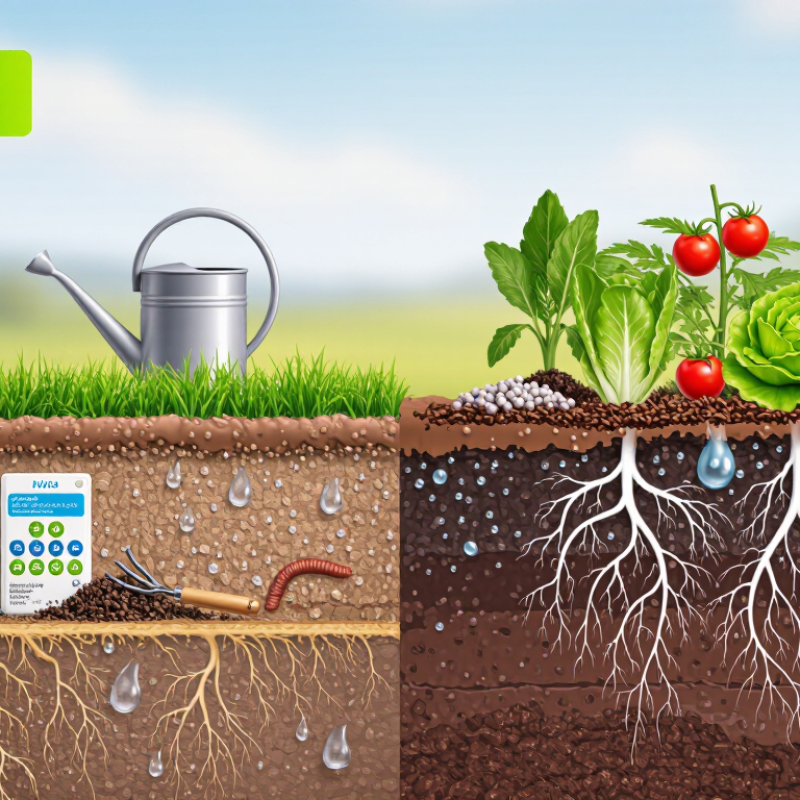
Fertilizers improve soil quality when they restore nutrients without disturbing biological balance. Nitrogen supports leaf growth, phosphorus aids roots, and potassium strengthens water regulation. Yet fertilizer cannot repair compacted soil alone. It works best with compost, crop residues, and reduced soil disturbance.
The FAO reported global fertilizer use at about 185 million tonnes of nutrients in 2021. That figure shows scale, but not efficiency. A soil test should guide every application. Check pH, organic matter, nitrogen, phosphorus, and potassium before choosing a product. Match the nutrient rate to crop demand and expected yield. Split nitrogen applications can reduce losses after heavy rain.
Small changes matter.
Balanced fertilization may support microbial activity by increasing plant residues and root growth. However, excessive phosphorus can accumulate and move into waterways. The OECD-FAO Agricultural Outlook 2024–2033 also highlights continuing pressure to improve nutrient-use efficiency. This is where practical judgment matters. A field may need nutrients, but it may also need drainage or organic matter. Choosing fertilizer by price alone is a weak decision. I would also question soil-test results taken from only one corner of a field. Soil varies visibly, even across a short distance. Fresh laboratory data, accurate application equipment, and seasonal observation produce more reliable decisions.
| Fertilizer Type | Typical N-P-K Analysis | Main Nutrients or Organic Matter | How It Can Improve Soil Quality | Best Soil or Crop Use | Release Speed | Important Selection and Application Notes |
|---|---|---|---|---|---|---|
| Compost | Approximately 1-1-1 to 3-2-2 | Stable organic matter; small amounts of nitrogen, phosphorus, potassium, and micronutrients | Helps improve soil structure, water-holding capacity, aeration, and microbial activity when used as a soil amendment | Most mineral soils, vegetable beds, gardens, and landscapes with low organic matter | Slow and gradual | Use mature, finished compost. Nutrient analysis varies widely, so avoid treating it as a precise substitute for a tested fertilizer. |
| Well-Rotted Manure | Often approximately 0.5-0.5-0.5 to 2-1-2 | Organic matter plus nitrogen, phosphorus, potassium, and secondary nutrients | Adds organic matter and can support aggregation, moisture retention, and biological activity | Field crops, lawns, and gardens when the material is fully composted or well aged | Slow to moderate | Use only properly aged material. Fresh manure may injure plants, introduce pathogens, and create excessive nutrient or salt levels. |
| Worm Castings | Usually approximately 1-0-0 to 3-2-2 | Stable organic matter and modest amounts of plant-available nutrients | Supports soil aggregation, microbial activity, and moisture management without supplying excessive soluble salts when applied properly | Seed starting mixes, containers, transplant holes, and intensively cultivated beds | Slow and gradual | Nutrient concentration is generally modest and variable. Blend with soil or growing media rather than relying on it as the sole fertilizer. |
| Legume-Based Green Manure | Variable; nitrogen contribution depends on species and biomass | Biomass-derived organic matter and biologically fixed nitrogen from legumes | Can increase organic matter, improve soil cover, reduce erosion, and add nitrogen after plant residues decompose | Crop rotations, fallow periods, and soils needing cover and organic matter | Slow after incorporation | Terminate before seed production. Allow residue to decompose before planting sensitive crops, and account for temporary nitrogen immobilization from high-carbon residues. |
| Balanced Granular Fertilizer | Commonly 10-10-10 or similar balanced ratios | Nitrogen, phosphorus, and potassium in relatively even proportions | Corrects broad nutrient deficiencies and supports plant growth; it does not substantially increase organic matter by itself | Established plants when soil-test results indicate a general nutrient need | Moderate; controlled-release forms are slower | Choose the analysis based on a soil test. Avoid routine phosphorus application where soil phosphorus is already high. |
| Nitrogen Fertilizer | Examples include 21-0-0, 46-0-0, or other nitrogen-focused analyses | Primarily nitrogen for vegetative growth and chlorophyll production | Improves plant growth when nitrogen is deficient, but does not directly build soil organic matter or improve structure | Nitrogen-deficient lawns, cereals, leafy vegetables, and high-demand crops | Fast to moderate, depending on formulation | Apply according to crop demand and soil-test recommendations. Excess nitrogen can cause runoff, leaching, weak growth, or delayed maturity. |
| Phosphorus Fertilizer | Examples include 0-20-0 or other phosphorus-focused analyses | Phosphorus for root development, energy transfer, and reproductive growth | Supports crop establishment when phosphorus is deficient; does not improve soil structure or organic matter directly | Phosphorus-deficient soils, especially during early root development | Moderate; phosphorus is relatively immobile in soil | Use only when a soil test indicates a need. Excess phosphorus can accumulate and contribute to freshwater eutrophication. |
| Potassium Fertilizer | Examples include 0-0-50 or 0-0-60 | Potassium for water regulation, enzyme activation, and stress tolerance | Improves crop performance when potassium is deficient, but does not add meaningful organic matter | Potassium-deficient soils, fruiting crops, root crops, and crops with high potassium removal | Moderate | Check soil texture and cation-exchange capacity. Excess potassium may interfere with magnesium or calcium uptake. |
| Slow-Release Organic or Polymer-Coated Fertilizer | Variable; commonly includes 10-2-8, 14-14-14, or similar analyses | Gradually available nitrogen, with optional phosphorus and potassium | Provides a steadier nutrient supply and can reduce the risk of rapid nutrient losses compared with a single large soluble application | Containers, lawns, landscape plants, and crops requiring extended feeding | Slow and controlled | Release rate depends on temperature, moisture, coating, and formulation. Follow the product analysis and application rate rather than estimating by volume alone. |
| Agricultural Lime | 0-0-0 | Calcium carbonate; may contain magnesium if dolomitic lime is used | Raises soil pH in acidic soils and supplies calcium; improved pH can increase nutrient availability and microbial activity | Acidic soils confirmed by a soil test | Slow to moderate | Not a general fertilizer. Apply according to buffer-pH or lime-requirement recommendations; over-liming can reduce availability of iron, manganese, and other nutrients. |
| Gypsum | 0-0-0 | Calcium sulfate; supplies calcium and sulfur without substantially raising soil pH | Can provide calcium and sulfur and may help reclaim sodic soils when used with adequate drainage and leaching | Sodic or sulfur-deficient soils, based on laboratory testing | Moderate | Gypsum does not generally correct soil acidity or compacted clay by itself. Use only when calcium, sulfur, or sodicity conditions justify it. |
| Sulfur Fertilizer | 0-0-0 | Elemental sulfur or sulfate sulfur for plant nutrition and soil chemical reactions | Supplies sulfur and can gradually lower soil pH as elemental sulfur is oxidized by microorganisms | Alkaline soils requiring pH reduction or soils with confirmed sulfur deficiency | Slow for elemental sulfur; faster for sulfate forms | Rate depends on soil texture, pH, organic matter, and sulfur particle size. Avoid excessive applications that can cause overly acidic conditions. |
| Biochar | Usually very low or variable | Stable carbon-rich material with variable ash, surface area, and nutrient content | May improve water retention, nutrient-holding capacity, and habitat for soil organisms, especially when properly charged with nutrients | Degraded or low-organic-matter soils; best evaluated through small-scale trials | Very slow and persistent | Properties vary substantially by feedstock and production temperature. Mix with compost or nutrient sources before use to reduce the risk of temporary nutrient immobilization. |
N-P-K values express the percentage by weight of total nitrogen, available phosphate equivalent (P₂O₅), and soluble potash equivalent (K₂O). Soil testing is the most reliable way to select a fertilizer and application rate.
Fertilizer restores nutrients that crops remove. Nitrogen supports leaves, phosphorus supports roots, and potassium improves water regulation. It works best with compost, crop residues, and limited soil disturbance. Fertilizer alone cannot repair compacted soil.
Soil tests show pH, organic matter, nitrogen, phosphorus, potassium, and micronutrients. They prevent unnecessary applications. Collect 10 to 15 small samples from the root zone. One corner of a field may not represent the whole area.
Yellow leaves may show nitrogen deficiency. Poor drainage, damaged roots, or unsuitable pH can look similar. Check the roots and soil moisture first. Adding fertilizer immediately may solve nothing.
Sandy soil loses nutrients quickly. Clay soil can hold nutrients tightly. Sandy fields may need smaller, repeated applications. Clay fields may require careful rates and better drainage. The same product will not behave equally everywhere.
Use the right source, rate, timing, and placement. Apply nitrogen in smaller doses during active growth. Avoid application before heavy rain. Keep fertilizer away from stems, drains, and open water.
Yes. Excess fertilizer can burn roots, weaken soil biology, and pollute waterways. Phosphorus may accumulate over time. More is not better. I might still underestimate losses after unusually heavy rain.
Mature compost can improve structure, water retention, and aggregation. It may not correct every nutrient deficiency quickly. Immature compost can temporarily reduce available nitrogen. Test compost for nutrient content and salts before repeated use.
Recheck soil every two or three years. Record application rates, crop growth, rainfall, and visible changes. Compare new growth after several weeks. A careful plan can still need revision. Small changes matter.
Improving soil quality begins with understanding how fertilizers supply essential nutrients, support plant growth, and influence soil structure and microbial activity. Before selecting a product, gardeners should examine plant symptoms, soil texture, drainage, and, when possible, conduct a soil test to identify nutrient deficiencies. This helps prevent unnecessary applications and ensures that fertilizer choices match actual soil needs. Learning How to improve soil quality with fertilizer also requires comparing organic and synthetic options. Organic fertilizers release nutrients gradually and can add valuable organic matter, while synthetic fertilizers provide more precise and faster nutrient delivery when used carefully.
The best fertilizer depends on the soil type and the plants being grown. Sandy soils may need slow-release nutrients and added organic matter, while clay soils often benefit from materials that improve aeration and drainage. Fertilizer should always be applied at the recommended rate, kept away from plant stems, and watered into the soil when appropriate. Responsible application protects soil health, reduces nutrient loss, and supports productive growing over the long term.

 TH Fertilizer